Taakiritia te Tuakiri

I am unsure where to start, but I feel that I need to get some scrambled thoughts out of my head and onto paper.  When I heard that the ‘big hui’ at Tuurangawaewae was going to take place, I was determined that I would go. Tuurangawaewae is just down the road, I have stayed there before, and I wanted to stand as an ally and an accomplice to listen to the kōrero and learn. Then the date was announced and I realised there was something familiar about it. I checked my calendar – bugger it! The same day as a trail running event I had entered and trained for. Should I pull out of the event and go to the hui instead?  I was conflicted but decided in the end that I should honour the previous commitment, but that I would still be able to read the post-hui commentary, watch the live stream (after the fact), and listen to any other kōrero that was recorded in social media. 

As I have sat here over the last few days and read the articles written in the aftermath of the hui this weekend, as I have scanned the snippets of the kōrero on the Kingitanga FB page, and scrolled through the Twitter feeds, inspired by the kōrero of the rangatahi and jotting down key sentences and ideas by the main speakers, I have maybe confused my thinking even more! There is so much to take in!  So, I am going to come back to what I know best, my comfort zone – and that is language to try to organise some thoughts.  I am not a fluent speaker of te reo Māori – far, far from it. In fact, I know only a very little, but I am learning slowly and as someone who is ‘language curious’ (I speak French fluently and have more than passable Spanish) I love exploring language and making sense of it.  

The hui used these phrases or mantras throughout;

Taakiri tuu te Kotahitanga

Taakiri tuu te mana motuhake 

Taakiri tuu te tuakiri 

Nowhere were these phrases translated as far as I can find. I am confident in the meanings of ‘kotahitanga’, and ‘tuakiri’ , sort of confident with ‘mana motuhake’, but far less confident with ‘taakiri’. So I turned to te Aka Māori Dictionary to see what I could find; 
Taakiri = to unfurl; to open; to strike – deeply affect emotions, to move; to flick (as a whip); to snare, to dawn;  to fly back (as a spring)

The complexity of te reo Māori and the richness of the nuances and contexts for the use of words is one of the things I find beautiful about the language but is equally, something that frustrates me no end! How am I supposed to know which meaning to choose? 

‘Unfurl’ gives me a sense that this hui is the opportunity to launch awareness about coming together as one, self-determination, and identity as a people.

The idea of ‘deeply affecting emotions’ also works – how powerful are the feelings when we come together as one, when we have self-determination, and when we feel strength and pride in our own identity? 

And then ‘dawn’, this is a bit like ‘unfurl’ in a way, but more poetic. This is the dawning of the strength as a unified people who are controlling their own destiny and who are confident in who they are. 

So, I have decided not to get hung up on the actual translation – I know well that it is often impossible to translate the deep meanings of concepts from another language simply by looking at the words. It really is all about trying to see the world from different perspectives and being open to the richness of cultures. I am an English woman, I have been in Aotearoa for 16 years this week. I have lived in France and Spain and travelled widely. I can see a little bit of the essence of other cultures through the windows of their languages as I have learnt them, but my outlook and my understanding of the world will always be predominantly from an English, western perspective.

And so,  I have decided to take some ideas, words, soundbites that have stood out to me from what I have read and try to make sense of them. I have tried to group them around those three key concepts of tuakiri, mana motuhake and kotahitanga but they sort of leech into each other – the edges are blurred.

Tuakiri – Identity

“The most contested piece of raupatu is the paa tuuwatawata of our childrens’ minds.”

Dayle Takitimu

A ‘paa tuuwatawata’ is fortified paa. An intended consequence of the raupatu o te whenua by Crown forces as they fought their way through the Waikato, was the loss of language, culture, tikanga, economic independence, and identity. This has had ongoing traumatic impacts on the lives of Māori ever since. Children grew up not knowing their language, their history, their culture and without those they lost their sense of identity. As well as the colonisation of the country, there was a colonisation of the minds and hearts of tamariki and mokopuna. The only way of reversing this is to immerse them in te ao Māori. For me as an educator, one way of supporting this is through education – providing opportunities for kaiako to ‘unlearn’ and ‘relearn’ the history of Aotearoa New Zealand so they can pass it on to their tamariki. Dayle Takitimu also said, 

“Education is kryptonite to racism; if you teach people the facts, if they can understand things from the perspectives of the other, the hate and the mistrust ebbs away.”

“The power and revolution for change belongs to the hapuu. Conscientise the people to take responsibility for their own change.” 

Mereana Pitman

I think this follows on from what Dayle Takitimu said about education and the impacts of colonisation of minds and hearts. For 150 years, Māori had limited or no access to their histories, or it was so traumatic that they buried it deep in the recesses of their minds. They were persuaded that it was detrimental to speak their own language and that English was the only way forward. Through the legislation that followed the signing of Te Tiriti o Waitangi and the New Zealand Wars, Māori were disenfranchised, treated as second-class citizens, and became dependent on the State.  It is essential that to exercise mana motuhake, they become conscious of what happened, are informed and can use that knowledge to bring about change. I know I have a responsibility as Tangata Tiriti to support that conscientisation, be there as an ally,  provide space to listen, for kaiako Māori and other Māori friends to develop a critical awareness of their social reality through reflection and action. I need to be critically aware myself too – who am I and what part have I played in that history, what part can I play, how can I reflect and take action without appropriating or taking over?

Mana motuhake – Tino rangatiratanga

“We’re at that point in history where the decision isn’t tino rangatiratanga or not, it’s tino rangatiratanga or nothing.” 

Donna Awatere Huata

I have to confess that this is another of those concepts that I am not entirely clear about. When I am asked, I say self-determination autonomy, the ability to have control over what is ours. Te Aka dictionary defines it thus; 

self-determination, sovereignty, autonomy, self-government, domination, rule, control, power.

But how is it different to Mana motuhake?  Te Aka dictionary defines it thus;

separate identity, autonomy, self-government, self-determination, independence, sovereignty, authority – mana through self-determination and control over one’s own destiny.

Very similar definitions so how do you differentiate?  Natalie Coates said,

“Tino Rangatiratanga is born in the whenua, it’s not something Tauiwi have, it belongs to us.” 

Why as Tauiwi don’t I/can’t I have self-determination or independence or control over my destiny?  One of the commenters suggested an explanation that I think helps me. They said that tino rangatiratanga is about us extending our absolute power and authority over that which has been handed down to us by our tupuna. It is something that is inextricably linked to the whenua and Māori connection to the whenua. Being Māori is about whakapapa, it is about whose waters you descend from (Nō wai au). 

Tino Rangatiratanga is a core tenet of Te Tiriti o Waitangi and one of the most contentious concepts, partly because, like me, the Missionaries in 1840 didn’t understand the concept – there was no one English word that explained it, so it has been poorly interpreted ever since the Treaty was drafted. Ever since then politicians and most other Pākehā really can’t get their collective heads around what it means and strive to interpret it based on their worldview, their experience and their knowledge (or lack of) history. People find it a threatening concept because when we don’t really understand something we feel like whatever it is, is taking away our power. The tino rangatiratanga of hapuu existed well before Te Tiriti o Waitangi.  It is not a right created by Te Tiriti but it is affirmed as part of it. 

So, where am I going here?  Maybe I’ll move on to the next concept to help continue the kōrero…

Kotahitanga

One of the whaikōrero that really touched me was one from Te Atamihi Whanga Papa, one of the rangatahi. When you hear young wahine speaking with such eloquence, passion and strength, you know that there is hope for the future. Ka mau te wehi! He momo ia! 

The kaupapa for her kōrero was around Kotahitanga. She talked about how rangatahi need to be able to flourish in two worlds; te ao Māori and te ao Pākehā. They need to be adept in the dining rooms of their marae as well as the boardrooms of the nation. They must be vocal speakers on the paepae as well as across the globe. They need to have the skills to be stewards of their culture, their whenua, and their whanau. 

“We need to be ‘decision-makers’ not ‘decision-takers”. 

How powerful is that? But wait, there is more, and this blew me away…. 

“We need to move from the unimaginable to the inevitable.” 

But how do we do this? she asked. Through kotahitanga. Together we can build the skills for mana motuhake – living in our own way, on our own terms. We need to come from a position of strength – we will be stronger together.  There has been plenty of kōrero in some of the social media strands about who speaks for who – who does the Kingitanga represent? Some questioned what right he had to call the hui. He doesn’t represent all hapuu and iwi. There are historical differences between iwi and hapuu regarding the Kingitanga. But the message that came through strongly was that hapuu and iwi from across the motu should be united in the face of the threat from this government and put aside historic differences. Why?

Tina Ngata, in her recent blogpost says this about why so many people turned up at Tuurangawaewae this weekend both physically and following on the live stream;

“I want to acknowledge and centre what drove thousands to meet at Tūrangawaewae:

That there is a specific and increased threat upon Te Ao Māori from this government and their proposed actions.

There are issues that arise out of our enduring colonialism, which we discuss every year, but thousands showed up because this government represents a new level of threat, one that needs a stronger response.”

So what is my role as Tangata Tiriti? How do I support the move for Māori to regain tino rangatiratanga, to find strength in their identity, to work together? Many Pākehā turned up at the weekend, many like me couldn’t make it, but we still tautoko the kaupapa wholeheartedly. We are here as allies, we stand together, alongside Māori with integrity, humility and honesty and the courage to listen and act when needed. I need to be a good treaty partner. What does that even mean? I’ll send you back to Tina Ngata to inform you on that!  What’s required of Tangata Tiriti? She explains it far more eloquently than I can. I need to read it again too, keep on reading it so the ideas become embedded in my being. In the meantime, I will read as much as I can, listen carefully and actively to those wiser and more experienced than I am, and be there when needed. An ally and an accomplice.

From Ally to Accomplice

It is December 2023. National, Act and NZ First gained the mandate in the October elections from the good people of Aotearoa to form a new Right Wing government. I won’t go into the politics and the systems that enabled them to get there, nor the role of the Media, Social Media, external fringe groups and well-funded organisations such as Topham-Guerin that may or may not have infiltrated them to sway public opinion. That is for commenters far more expert than I. 

What I can talk about is the impact it has had on me, how it has made me feel and how I can see that it has made others feel. The sense of weight that descended on election night, the dread of what was to come, was unfathomable. In the days and weeks that followed as we waited for the final counts of Special Votes and then the ‘negotiations’, I swung between hope that the humanity of the NACTs and NZFirst would come through and then despair that they would live up to all they had ‘promised’. I am an optimist at heart and try to see the best in people and situations. it was not to be, when the final deals were revealed it was worse than I could ever have imagined. 

The pettiness of repealing pretty much everything that Labour did in the last Government, everything that sought to build some equity for Māori, the use of te reo Māori, co-Governance in Health and Waters, measures that support the poor and disadvantaged and seek to start the redress of the imbalance of generations of colonial legislation. I have spent a lot of time (more time than I should!) on ‘X’ and ‘BlueSky’ and Facebook talking with like-minded people, sharing articles but also pushing back against the racist rants of others. There have been some excellent articles that I have read and shared more widely. In this article from e-Tangata, Deb Te Kawa warns that there is a real danger that the policies of the coalition ‘create a racial situation that will have severe consequences for Aotearoa.’  She goes on to say that ‘The electorate voted for minor changes, not reform — and certainly not a culture war.’

This culture war pits people against each other when we should be coming together to improve outcomes for all but more importantly to lift outcomes for Māori. The debates will be and should be robust, but they will also be vicious and personal. Deb Te Kawa says she is confident te ao Māori can endure these debates. She starts the article with this statement;

“Te ao Māori is more durable than a rock that’s been pounded by waves for thousands of years.” Many rangatira will relish the debates but she believes the Pākehā community will struggle, they are ‘uncomfortable with the politics of struggle and conflict’ whereas “Te ao Māori’s relationship with the state since its inception has been one of constant and enduring conflict.  

There is an increasing call from the right wing for ‘fairness’ and ‘everyone being treated the same’, and criticism of ‘race based’ schemes that provide an unfair advantage to Māori.  Their voices shout the loudest and it is their voices who have emboldened this colaition and their supporteers. It is the age old lack of understanding between ‘Equality’ and ‘Equity’.  In this article for the Spinoff, Emma Wehipeihana states that “We’re done with being asked to justify our ‘privilege’”. The Māori and Pacific Admission Scheme (MAPAS) is the scheme that supports Māori and Pacifica students to get into Medical Schools in Otago and Auckland. (It is, by the way, the route by which Shane Reti and his daughter got into Medical School)  Under this government it is under threat mainly because of their belief that we are all the same and there should be no favouritism shown. She is concerned that ‘in pursuit of benign-sounding slogans like “fairness” they will attempt to distract and position us against each other. They’ll do things like dog whistle to immigrants about how Māori get unfair privilege, while worrying loudly about the impact of immigration on public infrastructure and job availability. They’ll act as if rationing social services is fair, while hoping we fight among ourselves for the crumbs.”

At the end of the article, Emma reiterates the words from the title – Māori have had enough of explaining their right to exist. It is up to us now to learn about the history to understand why Maori are underserved and disadvantaged, to understand what the socio-economic, cultural and psychological impacts of colonial history have been on Māori. 

“Being kind is out. Being strategic is in. In the words of my Tukorehe cousin, Anahera Gildea – author, artist and aunty – we don’t need allies, we need accomplices. See you on the protest line, e hoa mā.”

For me, as someone just starting to find my place as an ally and what I need to do, this really resonated – be an accomplice – be there, actively supporting, doing, on the front line, not just standing by on the side supporting but not getting my hands dirty. Stand up and be counted but do it alongside, take some of the weight.  When the call to action came, I was there. On the protest line, holding my placard alongside many who I didn’t know but who felt the same way – Māori and Pākehā. Also alongside many who I do know, who I work with, who I have studied with, who are my friends. 

I met the wahine on her own as I walked home. She was standing proud on the roundabout at the end of my street, waving her hāhi Tino Rangatiratanga. I went to talk to her and asked her why she wasn’t with everyone else. She said that she had realised on the way there that it didn’t really matter where you stood as long as you stood. I reflected after that maybe her belief, her sense of identity in who she was and what she stood for meant that she didn’t need a crowd around her to validate her. She just knew that what she stood for was right.

This put me in mind of a podcast I listened to recently. Alex Barnes was a guest on Taringa Podcast. He talked to Paraone Gloyne about being an ally. Paraone described him as a “Pākehā pai”. He talked in the podcast about how it is important to hold onto who we are, our own identity, not try to be Māori but to hold fast to our values and be proud of who we are. He used the kiwaha – ‘Maumau te pango’ but switched it up to ‘maumau te mā’. He explained that if we don’t know who we are, if we don’t understand where we come from, our own culture and how we are here, we can’t engage well with anyone.

So that got me thinking too. In my desire to learn te reo Māori, to immerse myself in all things Māori, in learning all I can about the history of Aotearoa and especially the Māaori history, am I losing sight of who I am, am I abandoning or denigrating my own cultural heritage? Ever since I learned about how the English colonised India, Africa, what they did to the Scots, the Welsh and the Irish, when I was a teenager, I developed a deep sense of shame about being English. I knew that I also had Irish heritage so I latched onto that and claimed ‘Irishness’ not realising at the time that my Irishness probably stemmed from Englishness and my ancestors were actually originally colonisers!

So, I think I need to do some deep thinking about who I am, where I come from, and come to terms with it without carrying shame for it but acknowledging it so that I can stand as an ally and an accomplice with integrity, humility and honesty. 

Matariki

20220619_070436-01
Mātai Whetū Marae, Hauraki

24th June 2022 will be the first official Matariki holiday in Aotearoa, New Zealand. Last year the government agreed to have a Public Holiday to mark Matariki. This is a very significant step as it is the first indigenous festival in the whole world to be marked and celebrated with a national public holiday. The decision has not come without controversy, but we have it and that is that. It won’t be held on the same day every year as Matariki is governed by the lunar calendar and the rising of stars. I won’t try to explain it here but share this link for you to read as it explains it so much more eloquently than I possibly could. However, in short, Matariki is part of a cluster of stars that rise when Pipiri, another star, is visible in the sky. Matariki marks the start of the Māori New Year as it rises in midwinter around the time of the winter solstice. The Matariki star cluster is known as Pleiades in Greece (often referred to as the Seven Sisters), Subaru in Japan, Matari’i in Tahiti, Karatgurk by indigenous people in some parts of Australia, Mao in China, Krittika in India, Isilimela in Africa, Freyja’s Hens in Scandinavia, Ani’tsutsa by Cherokee Indians, and Tianquiztli by the Aztecs. Some cultures observe 7 stars in the cluster, some see 9 and others may see more. We can all see the stars, the moon and the sun wherever we are in the world, though our skies may look a bit different.

When we first came to Aotearoa, the sky seemed very weird and unfamiliar to me. I couldn’t find The Plough which had always been a point of reference to me but I could still see Orion’s Belt and I learnt to recognise the Southern Cross and now that is my point of reference.

Whilst Matariki is a Māori celebration, it is not observed in the same way across the country. There are small but significant differences in the time and how iwi celebrate Matariki and like other cultures, some recognise 7 stars and others 9. Reasons for those differences are many but I’m not going to go into them here, sorry! Rangi Matamua is a Māori scientist and academic and he has written and spoken extensively about what he has learnt about Matariki. This is a long video, but worth watching if you want to know more.

The main point of this blog is to share my first experience of how one iwi celebrate Matariki.

I was privileged to be invited to the Matariki celebrations at Mātai Whetū marae in Kauaeranga, Thames in the Hauraki district. Ngāti Maru are mana whenua in this area and I have been working with a group of schools to support them as they develop their local curriculum. If I understood correctly, Ngāti Maru is one of the iwi that recognises only seven stars. They don’t recognise Pūhutakawa (the star that helps send the souls of those who have died during the year to be stars in the sky) and Hiwaiterangi (the star that carries our wishes and dreams for the future).

IMG_20210413_211344_552
Taniwha on Kōpū Bridge as you come into Kauaeranga, Thames

Nigel and I drove up to Kauaeranga, Thames on Saturday afternoon so that we didn’t have a long drive on Sunday morning as the celebrations were due to start at 5.30am. Traditionally, Matariki is celebrated as the star cluster rises above the horizon at dawn.

We arrived at Mātai Whetū marae around 5.15am, it was foggy and damp but not actually raining as it had been all night! We found a place to sit around the fire. Tarpaulins were set out on the ground and there was space behind them to put our chairs and we settled in rugged up with plenty of warm clothes, raincoats, umbrellas and blankets. Gradually, the place filled up as the shuttle buses brought more people. It was uncannily quiet and we sat and watched, and listened, enjoying the peace and quiet in the dark and the time to think.

Sometime around 6am the opening karakia started. This was simply to open the proceedings and the kaikõrero also gave us some instructions about what was going to happen, we were asked to respect the sanctity of the event and not take photos or video during the karakia and karanga, though we were free to do so afterwards. I was heartened that I understood all of that kõrero in te reo Māori although it was reiterated in English by Koro, the kaumatua afterwards for those who don’t speak te reo Māori.

Then the formal karakia began. There were several Kaikarakia (men who said the karakia – karakia is often translated as ‘prayer’ as it is the closest concept we can relate it to, but they are more of an incantation, blessing, acknowledgment. Prayer to me is a poor translation as it has a religious connotation). The karakia referenced the stars, and what they provided for us (see below) and also helped us remember those who had died during the year. Matariki is closely tied to the Māori Orokohanga (Creation Story) Matariki is a short form of the full name “Ngā Mata o te Ariki Tāwhirimātea”. This ‘sand story ‘ tells the story of how Matariki got its name. Part of the wider constellation of Matariki includes Te Waka a Rangi and Taramainuku. Each night he gathers up the souls of those who have died in his kupenga (net) and then at Matariki they are released to become stars on the chest of Ranginui. A significant element of this morning’s ceremony was to remember those who have died during the year and release them – this is an important part of the grieving process and allows us to let go of those we love but still remember them. It’s a complex worldview and quite different from how westerners approach grief but the more I learn, the more I think how much healthier it is. So, Koro went around the people gathered and we all had the chance to call out the names of family and friends who had died during the year to let them go. It was a very moving experience.

20220619_080042-01
A Mullet and a fish head from a Kaipuku as an offering to Waitā

Each of the stars in the constellation guides an element of the Taiao (environmental world) so Waitī is the star of fresh water and all the creatures that live in it, Waitā is the star of salt water and all the creatures that live in it, Tipuārangi is the star of things that live above the ground, such as birds and berries, Tipuānuku of things that grow below ground such as kūmara. It is believed that how the stars shine at the time of Matariki foretells the prosperity of those things. Matariki is also a time to give thanks to those stars for the bounty that they provide. There is also Waipunerangi, the star connected to the rain, and Ururangi, connected to the wind. Matariki herself guides all of them. Some iwi, believe that Matariki is the mother of the other six who are sisters. Ngāti Maru is one of those iwi. Others, such as Ngāti Porou believe there are nine stars and whilst Matariki is the mother the others are brothers and sisters and they provide balance. According to Dr Rangi Matamua, there is scientific evidence to suggest there are nine stars and some cultures suggest there are even more. However, whatever the truth, the stories that each iwi and each culture around the world tell are valid in their own right.

20220619_075807-01
A Tītī (Mutton Bird) and a Kererū (Wood Pigeon) as an offering to Tupuārangi

So, part of the ceremony is to give back to the stars in thanks for their bounty. One of the things I found fascinating as we watched was how the firekeepers maintained the fire. It never lost its shape, they constantly fed it with logs, keeping the ‘teepee’ form. At this point in the proceedings, it was clear why. As the other karakia were being recited and we sent our loved ones to the chest of Ranginui to shine for eternity, they created an opening on one side of the fire, and took the embers out to a prepared space at the side. They then placed elements from the environment to cook; kūmara for Tipuānuku, Tītī and Kererū for Tipuārangi, Tuna (eel) for Waitī and Mullet for Waitā. There was a pause as they cooked and Koro explained what was happening. When the steam rises from the cooked food, (in some iwi, this kai is cooked in an umu (earth oven), and when it is uncovered the steam rises) karakia are recited to each of the stars as offerings of their element are given to them to nourish them so that they continue to provide for us during the year to come.

20220619_073007-01
Kūmara as an offering to Tupuānuku

There were 4 pou (posts) around the fire, the cooked kai was placed in rourou or kono specially woven from harakeke for the occasion and hung on the pou. Each kaikarakia went to a pou and offered up the kai to the appropriate star. Waitī, Waitā, Tipuārangi and Tipuānuku. By now the sky was starting to lighten despite the continuing fog and we could smell the fish and fowl baking in the embers.

20220619_072233-01
Tuna (Eel) in a kono as an offering to Waiti.

Once all the karakia had been recited and thanks were given, the karanga started. This was a beautiful and incredibly moving part of the proceedings. I am unsure what its purpose was. Normally, karanga happen at the start of a powhiri and are an exchange between tangata whenua (the people of the land) and manuhiri (visitors). However, coming at the end, my interpretation is that it was calling the stars to the people to guide and protect for the coming year. I need to ask my friends for clarification. Whatever it was, it was beautiful. These wāhine, kaikaranga took it in turns to call the stars each in their own way, the tangi (rhythm and tone) flowed and rang out in the silence of the brightening sky.

Once the karanga were over, people stood to tautoko (support) the kaikarakia and the kaikaranga with waiata (songs). The hakari (feast), in this case, hangi, would be ready soon but it wasn’t quite ready yet and we were entertained by a medley of waiata*, anyone who knew the waiata was invited to come up and join in. They finished off with a rousing haka.

Now it was light, we could see who was who and I soon bumped into some of the kaiako from the kura in Thames who I work with, we had a natter, took some photos and discussed what we had just been a part of. I had some kai, Nigel had a cup of tea – (hangi is not vegetarian!!), and then we headed off back to the van, the sky now light and the day had begun.

I felt strangely disconnected as we moved away, unwilling to leave. It was a very moving experience, a sense of being part of something so much bigger than me. For a short time, I was part of a ceremony and a story that is ancient and which connects generations. It also grounds us and connects us with the elements of an environment which nourishes us, guides us, and with which we have an inextricable relationship. In the maelstrom of our lives, it’s easy to forget those connections. This morning, it was humbling to take a breath, sit down, disconnect from technology, focus on a ceremony that is ancient, and reconnect to the environment.

20220619_105634-01
Sun shining through trees.

*(In my te reo class this evening we discussed ‘He aha te Māori Wāy?’ One of the things I suggested was that Māori can keep on singing, filling in time, and finding more songs until a signal from the kitchen that kai is ready.)

Design Thinking: developing inquiry and questioning

This post describes a practical session I ran with a group of teachers and some of their year 7 & 8 students. I have been working with them for 18 months now and have got to know them well. This was our very last session together. It takes us through a design thinking process to explore how to generate inquiry questions and support an inquiry process for learning. A Design Thinking process also aligns with the principles of the Technology Learning Area and supports how teachers can approach integrating the Digital Technologies Curriculum content across the curriculum.

I had decided, given the time (4 hours) to use the analogy of a play in three acts to structure the session;

The Prologue aligns with opening minds to ideas, to getting to know the content, to getting to know each other, to exploring (Te Pō)

Act 1 is brainstorming, ideating, blue sky thinking (Te Wehenga)

Act 2: Scene 1 is identifying a question, exploring ideas more deeply, trying ideas out, refining, seeking feedback (Te Ao Marama and Te Whakaata)

Act 2: Scene 2 is redeveloping, improving, refining, reflecting, iterating, improving, taking action. (Te Ao Tangata and Te Whakahua)

Opening/Prologue

The prologue is all about opening ideas, setting a ‘safe’; environment, whanaungatanga or getting to know each other. We started with looking at what made an effective team and I used an activity from Gamestorming called “Forming, Norming and Storming”. This asked you to consider how you would FORM a team, who you might work with, why, what strengths each of you brought to the team. Then to explore what your ways of working would be – your NORMS – what ‘rules’ or ‘expectations you might have of each other as you worked together, how you might ensure that everyone had a voice and all opinions were valued. Finally, what would you do if relationships started to break down, how you would weather a STORM, what strategies you might adopt to support each other and mend broken bridges.  I am unsure if this might have been a better activity to do later on as a starting activity once everyone had already decided who they would work with. My original thought was that it was useful to think about how to form teams, especially for the students when they tend to pick their friends to work with rather than focus on the kaupapa. In a later session with another school, where there were no children, I included it later on and it worked well as a whanaungatanga activity for the teams to establish ways of working together.

We moved on to a Survival Kit activity in which I asked the participants to make a list of 10 things you would put in a survival kit. I was deliberately vague about the context because I wanted them to have some ‘fuzziness’ about their goal and think broadly.  My aim here was to provoke some thinking but also to set up for an activity later in the session. 

We talked then a bit about the design thinking process and “Fuzzy Goals” and how to start off with your goal might not be well-defined and that’s ok. You can refine and define it more tightly as you explore and go through the process. Your goal might be along a continuum – you sort of have an idea of where we want to go, but there may be a roundabout way to get there. A fuzzy goal ‘motivates the general direction without blinding us to opportunities to divert, explore, pivot on the way, it allows us to follow our intuition.’

Act 1: Blue Sky Thinking

Next step was prompting some thinking. I brought along two artefacts. I specifically chose these as I felt they had a connection to the place I was in and also because I thought they would appeal to the students’ sense of curiosity and because they provided a wide scope for questions.

I gave everyone the chance to look at them, touch, examine and asked them to ‘wonder’ about them. We used “Opening Questions” 

These types of question encourage us to think widely, creatively, create divergence and variation, provide opportunities, they are part of getting to know each other and laying out the ground rules

  • What are ….? 
  • What do you think….?
  • Why…?
  • Tell me about….
  • What do you notice?
  • What is it for?

I asked them to generate as many questions and ideas as they could, blue-sky thinking, think big, be daring, be bold. Then they developed a question that they wanted to pursue – the time was pretty tight for this on purpose. It wasn’t the time to really dig deeply into an issue; it was a time to identify something that sparked curiosity, that they thought they might like to explore further, a time to develop a question and not a solution, a time to work out whether it was a question that was easily answered using a Google search or whether it was a question they needed to do a bit more thinking about. When we want our students to develop questions, we don’t really want them to come up with a question for which the answer is searchable, they need to wrangle a little with it, to come up with a solution that is new, innovative, that will make a difference. 

After a one minute pitch in which they briefly explained what their question or curiosity was, said what they had already learnt and stated what they wanted to explore further, they displayed their ideas on large sheets of paper and then everyone looked at them and ‘voted’ on the ones that they liked or thought they might want to explore further using sticky stars that I had provided them with.  At this point, they could choose to stick with their own idea or go with someone else’s.  We talked about ‘holding an idea lightly’ as this is just a starting point and springboard to further research. They formed teams of no less than 2 (in a bigger group you might stipulate that groups couldn’t be less than 3) and moved on to the next act. 

Act 2; Scene 1

Now it was time to work in teams – we revisited briefly the ‘Forming, Norming and Storming” activity we had done at the start as they worked together – and start to really delve more deeply into their question and do some research. The idea here was to develop more fully what their question or problem was, it was still not time to come up with a solution. It was a time to gather information about the topic. In a classroom situation here, this might be the time for some direct instructional teaching that might arise as needed. It might be point where, as you work with the kids, you identify gaps in their knowledge and work with them all together or in small groups. It might also be a time where you just observe and provide feedback, you may need to facilitate conversations if you spot that relationships are strained, that not everyone has a voice in their group. 

It was time for introducing Examining Questions that help us to find out more about something, to deeply learn and understand. (Marama pū)

  • What is it made of?
  • How does it work?
  • What is it for?
  • What are all the parts?
  • Can you describe…?

Explorative Questions follow on from Examining Questions and prompt us to use our imagination and think about possibilities. It is important at this point that we are still very open-minded and encourage creative, whacky ideas.  They force expansion on new points of view and uncovered areas. 

  • What else works like this?
  • What if all the barriers were removed?
  • What are we missing?
  • What could we do to improve….?
  • How could it be redeveloped, re-imagined…?
  • Have you thought of…?

Affective questions which reveal people’s feelings about something. How do you feel about…?

Reflective questions that encourage more elaboration. What do you think causes…?

Probing questions that invite a deeper examination. Can you describe how…?

Analytical questions that look for the roots of a problem. What are the causes of…?

Act 2: Scene 2

After they had had a chance to do some exploration and research they had to prepare and deliver another One Minute Update to the whole group to explain what their problem was, whether it had diverted from their original, what they had learnt, what they saw as things that could support them and what might hold them back as they explored further, what else they needed to know and what support you might need.  

They reflected afterwards that this was a valuable way to keep kids on track as they worked, it was a useful way of seeing what progress they had made and it was extremely valuable for them as participants to have to stop and focus on where they were, and what they needed to do next as it was easy to fall down rabbit holes when they were researching. A teacher’s role as a facilitator in this would be to provide feedback to the groups as they presented, to ensure that One Minute Updates were only one minute, and to then follow up with any support that they felt they needed. You may also identify support that they need that they weren’t aware of! This is also a place where you could bring in outside expertise. If the kids are working on an issue around pollution, for example, you might get them to approach the Environment Agency to answer some specific questions.

We returned to our Survival Kits for a follow-up activity. This was designed for two reasons;

  • a brain break, to take them away from what might be a bit of a fug as you grapple and to possibly break any tension. As a teacher, if you were working with a whole class, you might introduce a brain break at different times for each group as you notice that they are going round in circles or struggling in their team. It is useful for kids to start to identify these points and have a range of strategies to use. 
  • to model how useful it is to prioritise and to learn how to identify things which you might think are essential to solve your problem but aren’t really – to hold your ideas lightly.

I asked them to take their 10 essential survival items and lay them out in order of importance. This is an individual activity so also provides time to think without lots of white noise around.  Then they compared with others in their group and had to explain why they chose those items in the first place and why they were now in that order. They also had the chance to change the order after discussion. The crunch came when I asked them to take 5 away. Some of them simply took away the bottom 5 but then reconsidered – were they really the least important now they couldn’t have them at all? 

Other brain break activities could be;

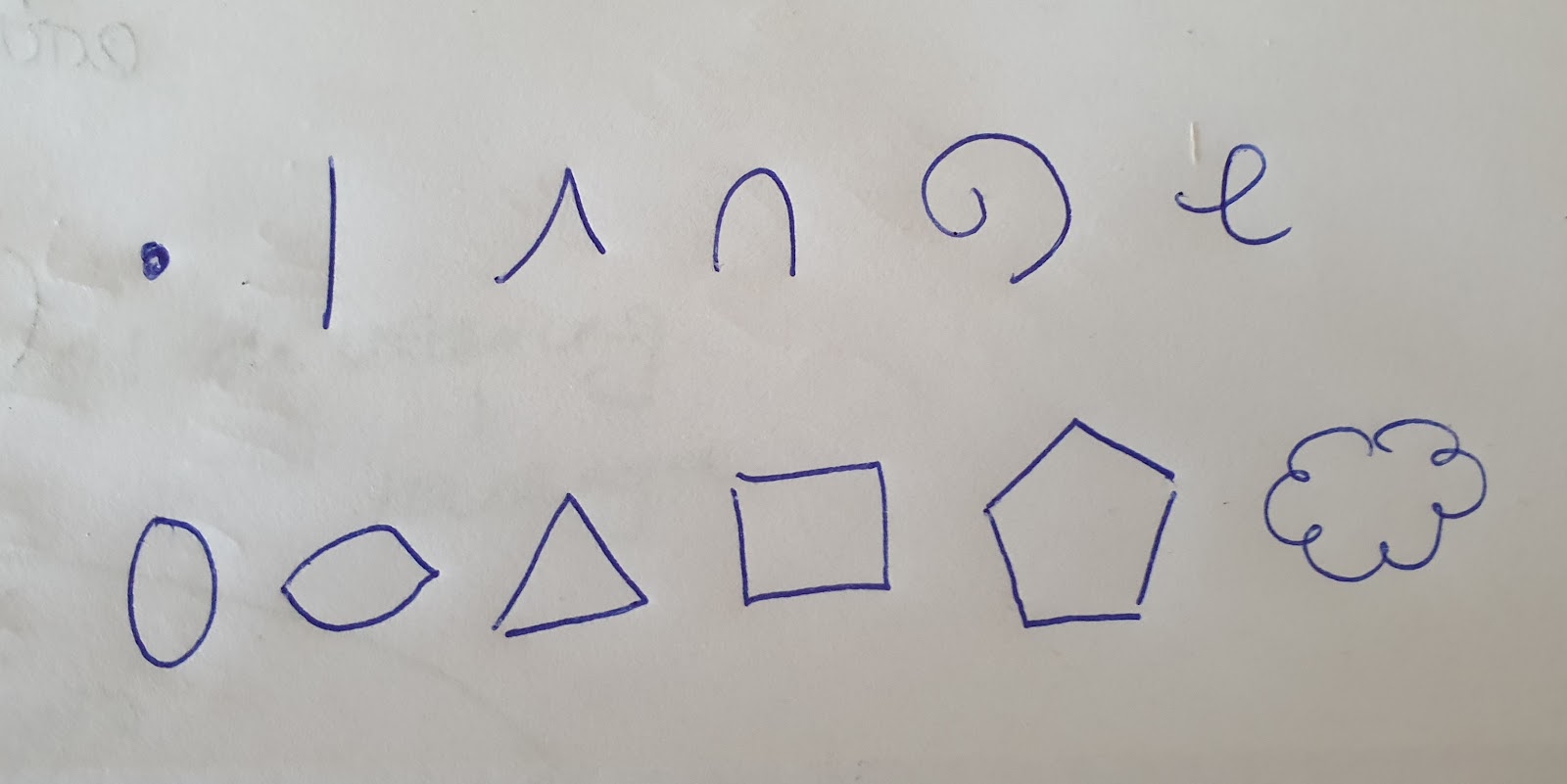
Creativity 12 basic symbols 

You can create anything from these 12 basic symbols. This and the following activity (Squiggle Birds) are fun activities to show that you can create anything with some imagination but that constraints are often a good thing to help focus and develop creativity

image

Start with using them to form the numbers 0 – 9

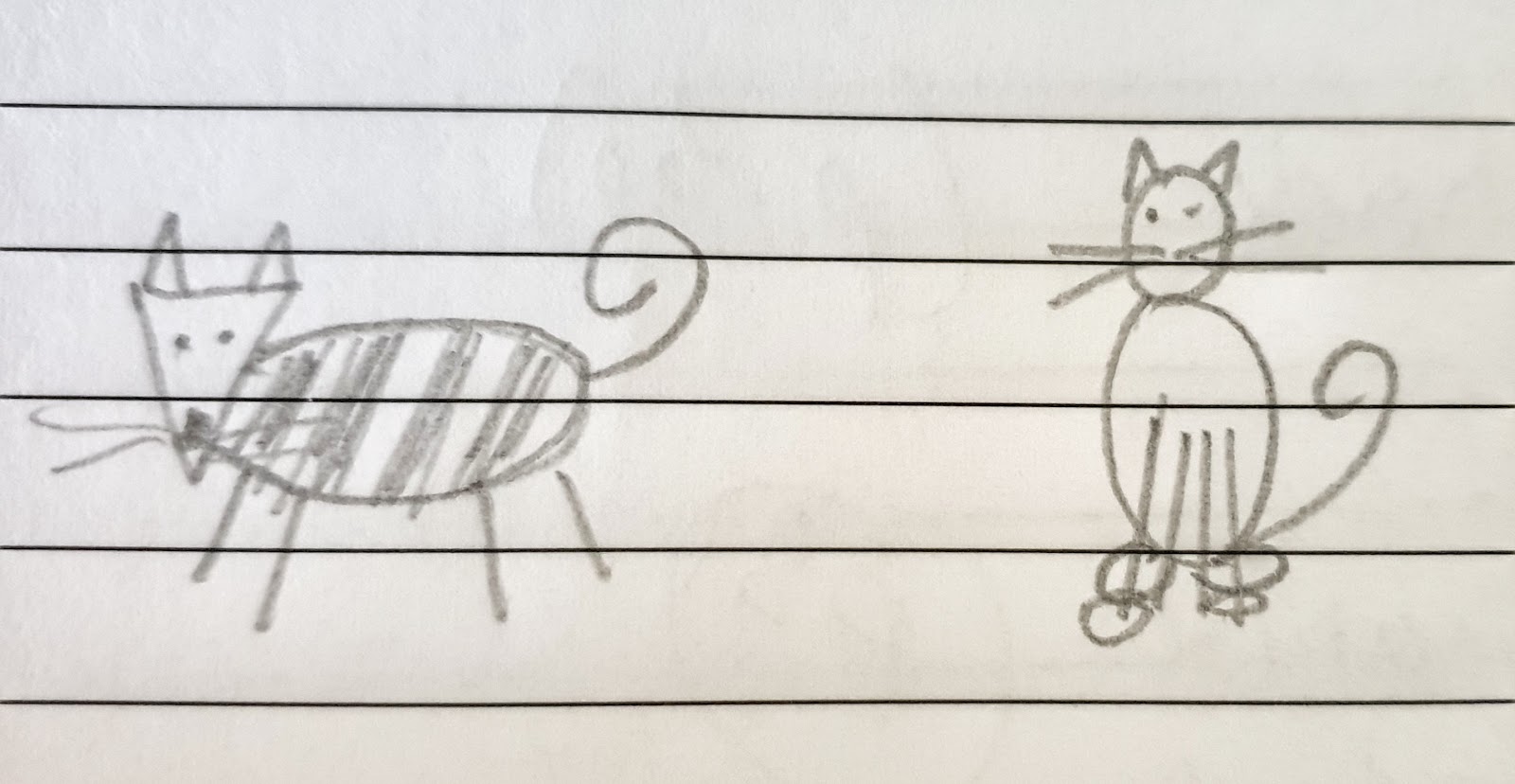
Then use them to draw 5 different cats or dogs…

image

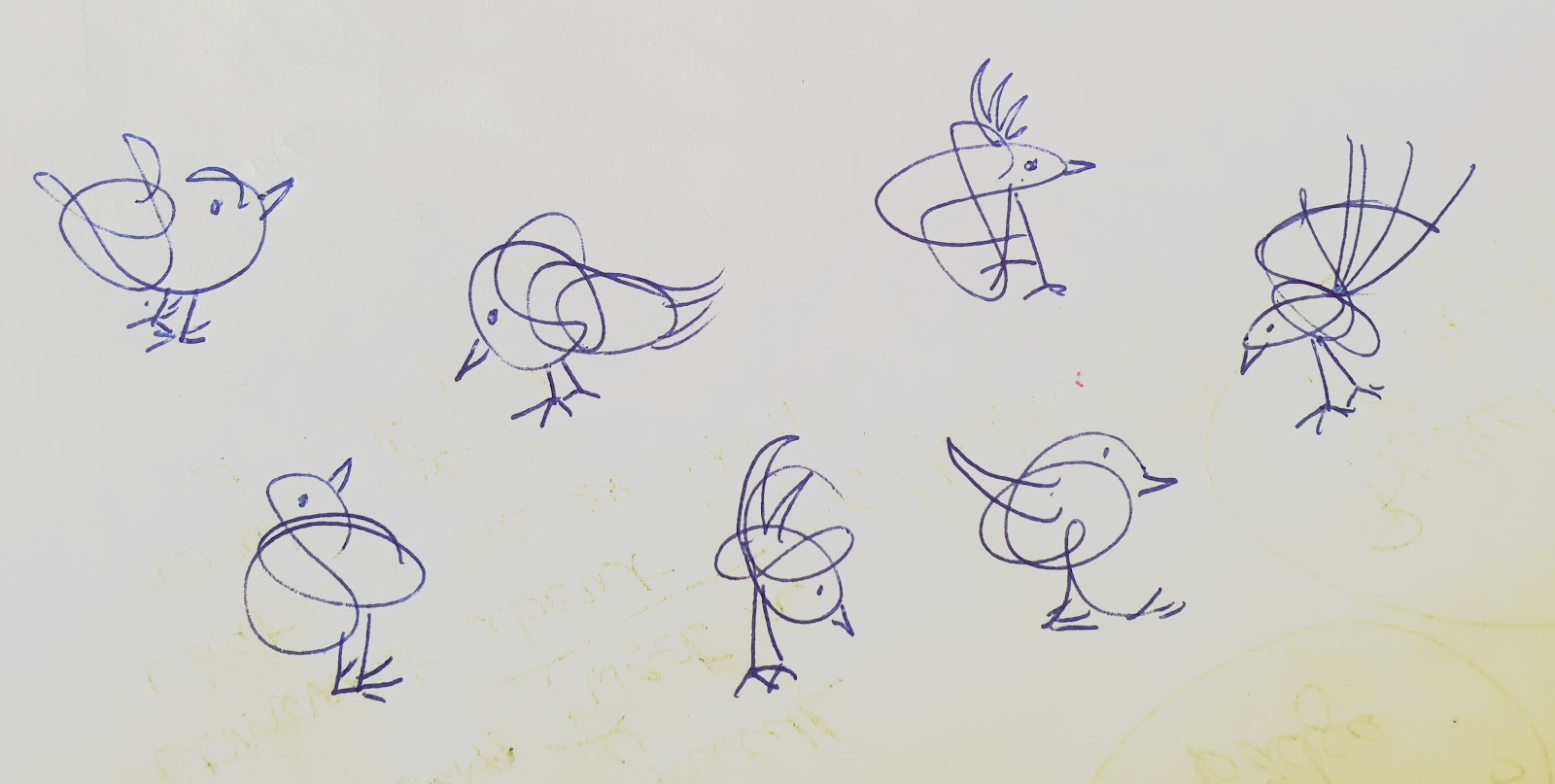
Squiggle Birds is a really quick activity which gets people used to stretching their visual thinking muscles. Just get everyone to draw random squiggles on a blank piece of paper and then add a beak, wings, a tail and feet on them so they look like birds. It’s surprisingly easy and demonstrated that our mind is wired to make patterns, that we don’t need a heap of drawing skills to convey an idea. You don’t even have to use birds – try anything!

image

Act 3: Prototype/Te Whakaata & Test / Te Ao Tangata

We didn’t have time for this part but it is the point where lots of wrangling goes on, the discussions get messy, you start to get confused and your direction sometimes just doesn’t seem clear. Your goal seems to be getting fuzzier but it is the time to really focus in on it and remind yourselves what you are aiming for.  Research sends you off down rabbit holes but you have to start to narrow down the options, set actions, roles, and timeframes. Another One Minute Update in this phase is useful to keep focus and to reset. The feedback from the facilitator/mentor at this point is crucial to support kids to stay in touch, to feel like they are making progress and to encourage them to think of opening up their minds again as they may have got bogged down. At this stage, you would also gather some feedback from outside your own group about the validity of your idea – if you are working on a product to sell and nobody actually needs or wants it, there is little point in continuing. If your presentation is confused and unclear to the recipient then you will need to re-evaluate and re-design. You would use the Closing Questions to focus on selection, decision making, commitment and action. We need to make some decisions, really narrow down the options and select one to move forward with.

  • What do we need to prioritise?
  • What is feasible?
  • What can we do in the short, medium and longterm?
  • Who is going to do what?

A final presentation to conclude should be short and sweet; 3 – 5 minutes to present then some questions. The actual product or documentation that goes along with the presentation should be appropriate to the issue or problem. It might be a website, a written report, a video, an app, a physical artefact but the presentation that goes with it needs to explain clearly;

  • What the problem or question was that you were seeking to address
  • What you learnt
  • What the enablers and blockers were
  • What your solution is
  • How it will help others
  • What you see the next steps would be

Feedback for One Minute Updates and for the Final Presentation should come from the floor, encourage everyone to be involved in the feedback process. It is an opportunity also for kids to learn about giving and receiving effective, respectful, critical feedback and forward.

For our session, we finished off with a reflective activity. We had talked before about the importance of reflecting on our mahi and what we have learnt and how it can help us as we set goals and actions for the future. I asked them in their groups to reflect on these 5 things:

We spent a good 20 minutes on this and I used the 1 – 2 – 4 – many approach – time first of all for them to think individually, then time to share in a pair, then share as a group and then feedback to the whole group. This gives people time to think if they ‘think to talk‘ people and then still time for those who are ‘talk to think‘ people.  The feedback was hugely valuable for me as a facilitator and for them as teachers and learners, we discussed as a group what they had written and had a chance to question each other and clarify. One comment from each of the elements;

Positive aspects; “Learning with the teachers and getting involved.”

Things you have learnt: “The benefit of working together and sharing ideas. Also the importance of focusing ideas to get a clear idea of what I’m researching.”

Stand out moments: “Reporting back to the group: so neat to see the variety of ideas that can come out of the stimulus provided and the enthusiasm to share ideas. It’s okay to think differently.”

Something I struggled with: “Going off on tangents whilst researching.”

Actions: I would like to use this with my class in future to generate enthusiasm for a topic and a process for effective research.”

A tātou kura

Atawhai ngā rito, kia puāwai ngā tamariki.

Ako i ngā tamariki, kia tu tāngata ai, tātou katoa.

Cherish and nurture the shoots, so the children will bloom.

Learn from and with these children, so that we all can stand tall.

Over the last few months, I have been observing teachers on the TER programme and so I have visited a lot of schools. After having heard Janelle Riki-Waaka talk about what schools look like, sound like and feel like a few years ago, I have made a point of trying to enter each school and see it through the eyes of a Māori parent.

The ‘look like’ part of it has definitely improved. Most schools have a whakatauki, many have the school motto in te reo now, though an alarming number have Latin mottoes. I wonder how they came about and whether anybody understands them? Some have their values either entirely in te reo or a mixture. It still grates when I see schools trying to force their values into a word so that they are easily remembered which often means that the Māori value is there just to get a letter to make the word – I saw one the other day that had all the values in English except the last one which was ‘Manaakitanga’ so they could spell a word.

I like how one school I have visited links qualities to the people whose names they used for their ‘House’ names and uses them as their values. Of five people, 3 are male, 2 female and one of the females is Māori. I’ll leave you to ponder on that mix.

I make an effort every time I enter a school of saying ‘Tēnā koe’ or ‘Kia ora’, or ‘Mōrena’ or any other appropriate greeting. So far, I can probably count on one hand the number of times the reply has been in te reo Māori. The majority of receptionists are white females. They are generally lovely, smiley, warm people. I wonder how much office staff and other ancillary staff in schools are included in professional learning about culturally responsive practice or learning about partnership and te Tiriti? As I walk around schools, I often come across cleaners, support staff and groundsmen. When I greet them in te reo, I frequently get a ‘kia ora’, or a ‘mōrena’ in reply and a beaming smile.

Once I get into classrooms, what do I see, hear and feel? In many classrooms, I see the date written on the board in te reo Māori, there are numbers, and greetings, I see the school values if they are in te reo Māori already displayed for all children to see. I sometimes see key kupu – the names of subjects or the words that are related to a unit of learning, there may be posters of the kara, tinana, ngā rā o te wiki, karakia for kai and karakia timatanga. In a few schools, I have seen the school pepeha beautifully presented as a poster. What haven’t I seen? Any student work in te reo Māori on the walls.

What do I hear? If I am there at the start of the day, I sometimes hear the children saying a karakia. I may hear the teacher greet the students with ‘kia ora’ or ‘mōrena’, give basic instructions such as ‘E tū’ or ‘E noho’ or “whakarongo mai’, ‘titiro mai’. Some teachers maintain and build on thos instructions, for some, it happens sporadically. Sometimes, I see and hear no te reo Māori in the classroom at all.

What do I feel? In nearly all schools I feel a sense of belonging, of children being challenged, nurtured, supported to be who they are and learn in ways that are appropriate to their needs. In most schools, children have choices about how they learn and have opportunities to share and lead learning with each other. Relationships are strong, both between kaiako and ākonga and between tamariki.

What I don’t see, hear and feel is well-developed, holistic environments in which te reo Māori and tikanga is integrated and normal.

I am interested in the local elections that are being held later this year. There is a real need, in Kirikiriroa at least, to get more people out to vote. Only 30% of those eligible to vote turned out last time. More than 50% of our eligible voting population is under the age of 35. The majority of those who voted last time was over 55. The Council is made up of mainly white, middle-aged men or white middle-aged women. A group of people, united through Twitter and the hashtag #lovethetron are looking at ways to motivate ‘millennials’ to vote. We already have several ‘millennials’ standing either for Mayor (Louise Hutt) or for council positions (Anna Smart, Tim Young are two of them), the challenge now is to get the youth out to vote.

There is a group called Seed Waikato….

Seed Waikato is a movement that brings millennials together to improve their wellbeing. Led by millennials, we run inspiring events, workshops and digital education that empower you to dream big and take action.

I went along to one of their events a couple of weeks ago. (I know, I’m not a millennial but I have given birth to two!) and as they say, they’re very inclusive and as I heard on the night ‘if you don’t have a connection with a millennial you are likely to quickly become irrelevant.’

We have also been having coffee over political kōrero in a local coffee shop. This came about through the twitter chat when we decided that we really needed to know more about the issues that might be important for the local election and start to get to know the candidates and what they stand for. So far there have just been two of these kōrero and you really need to be on Twitter to get to know about them so although anybody is welcome, the scope for getting to know about them is narrow. Nevertheless, it’s a start and we’re looking at ways to branch out.

So what’s this got to do with Culturally Responsive Practice?

I guess, that both these things just aren’t culturally responsive. They are ‘white’ constructs – the idea of coffee mornings or afternoons or even evenings – are they a te ao Māori sort of thing? Where do kōrero about politics happen and how and where would we engage with Māori. My guess is that they happen at the marae over kai, in the kitchen or at hui that don’t really have a fixed start and end time. I asked yesterday on Twitter, what proportion of Māori voted at the last local elections. I’m supposing that, just like the youth, they didn’t. Because they don’t see themselves in the ‘system’, they feel like decisions will be made anyway regardless of what they think or say because they don’t have a voice.

Interestingly, Hamilton City Council has decided to have Māori representation on some Council committees. The jobs were advertised, local iwi were asked to nominate candidates and 5 worthy people were selected. This is a positive start but my wondering is what the selection criteria were, who applied, how well do they represent ordinary Māori in our city? Is it time to have Māori seats on Council so that we ensure fair representation? Boards of Trustees in schools co-opt Māori and Pasifika reps if nobody from the community stands or is elected to ensure that our treaty commitments are upheld in all decisions made. Why not Councils?

So coming back to schools. There has been some robust discussion recently regarding the compulsory teaching of NZ History and Te Reo Māori in schools. Aotearoa, New Zealand is a bi-cultural nation with 3 official languages, which I believe should be spoken at least at a basic level by all citizens. It’s a fundamental part of our commitment to te Tiriti o Waitangi. Knowing our own history – all of it not just one side of it is absolutely necessary to be able to move forward together. If we are to see, hear and feel that commitment in our community and society as a whole all our ‘institutions’ white constructs or not need to work harder at their commitment to honouring Te Tiriti o Waitangi. Kids need to see, hear and feel it everywhere they go but school is a place that they spend a huge amount of their time in, so we have to get it right there, right from the beginning.

How bi-cultural is your school?

childs painting of a big orange sun with a face
Painting by Aonghas Robertson aged 8

I am currently learning. What’s new? I am currently deepening my understanding about culturally responsive practice and what it looks like. This blogpost is my response to Janelle’s Blogpost – “I don’t see colour, I treat everyone the same”.

When we first arrived in Aotearoa New Zealand we needed to find schools for our boys aged 8 & 12. Before we left the UK we searched online for prospective secondary schools and did a bit of research about the education system. We learned that schools were zoned which meant that we needed to live in the right area to get into a school. My husband had secured a job at the University of Waikato so we looked at which schools were in the immediate area thinking that that was where we would live.  There were three schools; one was a Catholic Boys school, one was an all boys school and the other was a mixed school. We talked to our son who was already at a mixed comprehensive school in the UK to see what he would prefer.  He said he would prefer the mixed school so we called them to see to find out more.  The lady who answered the phone had a very familiar accent. She was warm, friendly, very informative and it turned out that she came from West Yorkshire just down the road from my home town of Leeds.  We immediately felt a connection. 

When we arrived in New Zealand, we went to enrol him at the school and met the lovely lady from West Yorkshire (we have since become friends!) Having someone there with whom we connected made all the difference in making us feel confident and comfortable that this was the right choice for us and our son.  Well, to be honest, by the time we’d arrived it was the only choice as we weren’t in zone for any other school except the Catholic one and since we aren’t Catholic that wasn’t an option.  So it was heartening to have some sense of familiarity.

So, to our wee son. There were several primary schools in the rohe. We looked at their websites which, to be honest, didn’t tell us much 11 years ago. We measured how far they were away and whether we (our son) could easily walk or cycle there from our rental home. Then we arranged to visit. The closest to home seemed like the favourite on the face of it.  Five minutes walk, round the corner from our other son’s secondary school so they could walk together, relatively small so he wouldn’t get lost as he got to know the place and the people.  

No connection. The office lady met us and made no effort to talk to our son. She talked over the top of him at us.  We didn’t get to meet any teachers and she suggested that our son would have to go back a half year so that they could work out where he really fitted in terms of his academic level.  Being a teacher I had done my homework so I knew which year he should be starting in although I would have been happy to discuss with a teacher to ensure that he was best placed.

On we went to the next school.  We walked in.  The first person the receptionist spoke to was our son. She asked him his name, how old he was, when his birthday was, what he liked doing, where he came from. Shyly he gave his answers. As soon as he said when his birthday was she said what class he would be in and talked about other children in the class who would help him settle in.  Then she turned to us and invited us to meet the DP. 

It was a no brainer. We never even went to the 3rd school. 

In retrospect, we didn’t see any evidence that we were arriving in a bi-cultural country in those schools. There may have been a few Māori words around and some artwork but nothing that shouted out to us “Aotearoa, NewZealand – Bi-cultural country with 3 official languages and a Māori history and tikanga.”

I guess what I’m saying is that as a newcomer to the country having a welcome and friendly face who connected with us and our child made a huge difference at the start.  (What happened next is another story!) So, when I think of any child and their whānau making that step into a new school, the relationships and the connections you make right at the start make all the difference.  In Janelle’s post she asks “What would I hear, feel and see in your school that would send a message about how my child’s history, language and tikanga are going to be celebrated?”

As immigrants, we knew that we were coming into a ‘foreign’ country where we would see a different culture and history, though of course, it would be our language (or would it? That’s also another story!)  But looking back now it didn’t feel different enough. Yes, my youngest came home telling us about songs he learned, and his first piece of artwork told the story of Māui and the Sun,  and he talked about learning about the Treaty of Waitangi and having to make a class treaty.  For my eldest at secondary school, there was no obvious evidence that we were living in a bi-cultural country.   

And there should have been.